
The "Real" Version
Rant incoming

Backrooms: Everything Must Go is now in theaters.
From what my podcast partner John Longino tells me, it’s the original Backrooms movie, and after the credits, a YouTube short, with a different Backrooms story.
Sorta like what Tarantino did with Kill Bill a few months back, tacking a “lost chapter” animated by the Fortnite crew onto The Whole Bloody Affair.
(If y’all’s have suffered through my previous nattering on “Director’s Cuts,” you can guess where I’m about to go.)
I’m a guy likes to have seen the “real” version of a film. Whether that’s the way the director intended it, or whether time and popular opinion has codified a certain version of it as the “real” thing, I like to think there’s some canon version, if only so that everybody starts from the same place when talking about art.
Like, you see a painting, that’s the painting. If the painting gets destroyed, or slowly fades/erodes, or gets covered in blue paint by protestors, then in my mind, even if the painting is restored or recreated, nobody will ever lay eyes on the original again. That art has been lost forever.
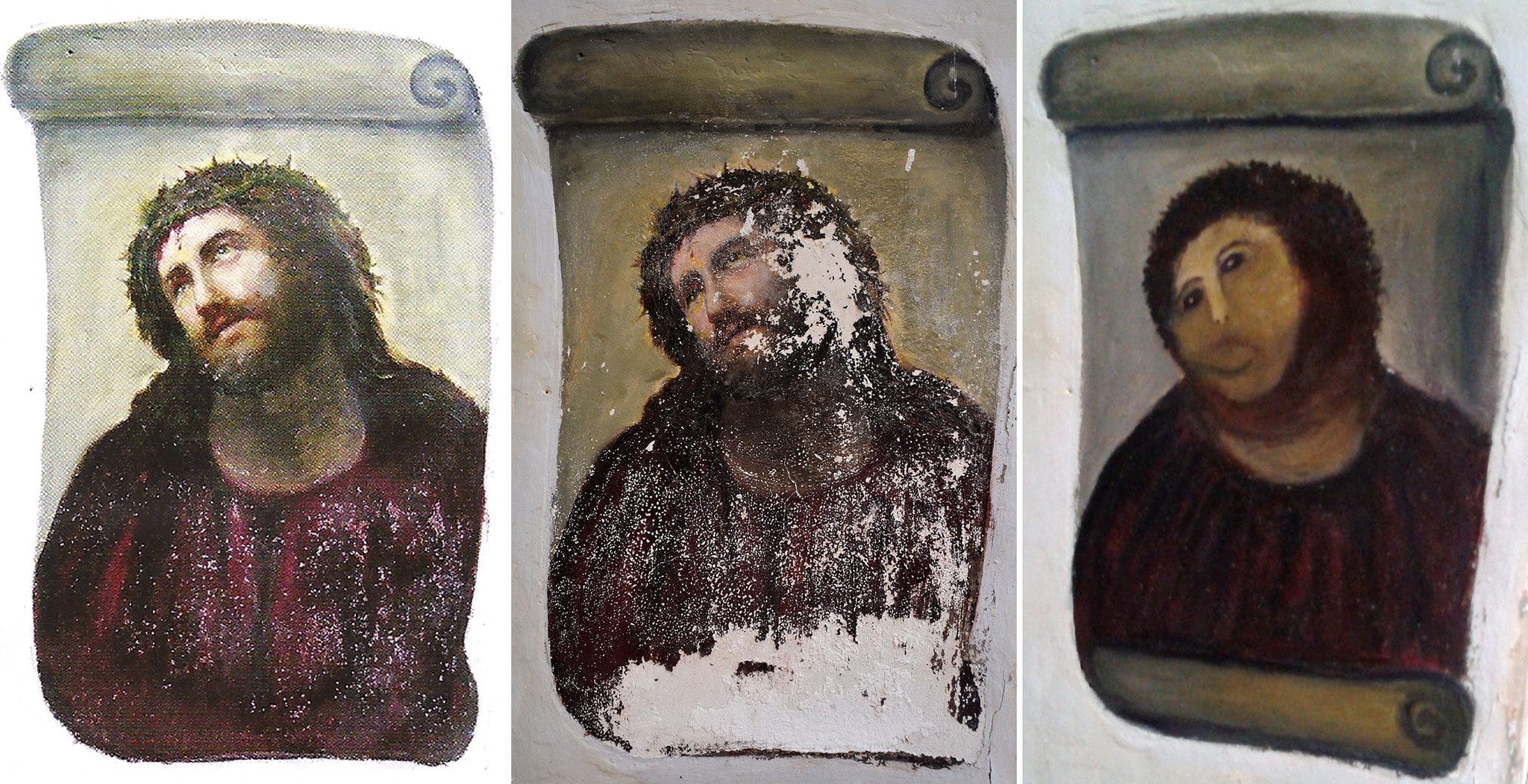
Sometimes, the restoration/recreation is all we have of a thing. And that’s life, way it goes sometimes, probably better to have the copy than nothing at all.
(Perhaps with the exception of the Ecco Homo Fresco.)
But film gets confusing, because not only are there multiple ways to see a film from day one (say, widescreen vs. IMAX), but then, studios or directors feel the need to tinker.
And sometimes that tinkering is for art, and sometimes it’s for money.
Though sometimes, the money grab makes the art better, and the earnestly-intended tinkering to “improve” it makes it worse.
Backrooms reeks of cash grab. And hey, we’re all adults here, we knew the movie biz was a desperate whore, only in it for the sweet green. Backrooms is one of the biggest moneymakers of the year, they’re gonna squeeze that stone bone dry.
And, not for nothing, but sometimes, it’s fun when they do this kinda thing.
A Bug’s Life did it way back in the late 90s. In the midst of its profitable theatrical run, they re-released the film with extra gag “outtakes,” made especially for the purpose of keeping the film in theaters.
That was a fun idea. It wasn’t strictly necessary, you didn’t have to see the movie again to see a missed character or plot point or deeper themes, you’ve still “seen” the movie, it was just a fun extra.
And Backrooms sounds pretty similar.
In the Kill Bill example, it was fun to see how the Pussy Wagon got destroyed, and because it was animated, it didn’t have the feel of a “canonical” experience. (It was animated from the original script, that got rewritten during production, giving the new opponent’s dialogue to Gogo in the original movie, making it was a touch repetitive.)
That’s always the question with directors cuts and the like. Were the original movies missing something without the footage? Was the director just dying to keep it in, but bowed to studio pressure?
Does it make the film scarier, sadder, more exciting, more romantic? Does it give us new stuff to think about?
Or does it make the film more repetitive? Were the extra minutes lost for good reason?
Tough to say sometimes.
Spielberg did it way back in 1980 with Close Encounters. Nobody needed to see inside that spaceship. They wanted to, but nobody needed to. But Spielberg loves money as much as the next guy, and thus was birthed the Special Edition.1
So which is the “real” version? The original Theatrical version? The Special Edition? The Director’s Cut that followed years later where Spielberg changed his mind again and took out the inside of the ship, but left other changes?
If I don’t see all three versions, what will I be missing? What version makes the art complete?
And does not seeing the inside of the spaceship make it a better experience? If so, has the art been forever ruined, metaphorically slopped with blue paint?
Other hand, there’s a perfectly legit case to be made for altered versions. Bladerunner, Aliens, Lord of the Rings… with Rings, it even became accepted practice to release extended cuts before the next chapter was released, and everybody, studios and audiences alike, seemed happy to accept the practice. People didn’t want to sit in a theater for four hours, but were willing to do it at home.
And with all those director’s versions, the recuts showed us new depths of story or character.
But then there’s the Friday the 13th “Unrated” versions with 6.5 seconds of extra gore.
Or Greedo shooting first.
Hey, I’m a film geek, I’ll watch ten different versions of a movie I like out of curiosity’s sake, so really, it’s people like me that don’t help the problem.
But, flip side, even accounting for my geek curiosity, I’m still sensitive to films being forever mucked with.
And I’m not sure where to draw the line.
I’m perfectly willing to reconcile two different versions of Touch of Evil living side-by-side, but the idea of the three different Close Encounters makes my teeth hurt a little.
And then there’s the home media clusterbang.
Couple months back, David Fincher let the beast out his chains, with the 4K release of Fight Club.
Peoples were spittin’ mad (y’know, in the internet sense, which is to say, slightly perturbed over a thing that probably don’t matter much) that Fincher went back and re-cut and re-colored Fight Club yet again.
(You can read about it here-ish:
https://movieweb.com/david-fincher-fight-club-4k-hd-version-changes/ )
But this is hardly the first time Fincher has done this.
Fincher, like Michael Mann2, has changed all of his movies, every time they’re released in a new format.
The initial DVD release of Se7en had like four documentaries where it showed how he went through, frame by frame, and readjusted whatever he felt like needed adjusting for the DVD.
So, any of you who first sawr Se7en in this millennium, likely haven’t seen the “original” version.
Fincher and Mann are hardly rarified. I was listening to Nicholas Meyer’s autobiography, and he offhand mentioned how he made “slight changes” for the VHS copy of Star Trek VI: The Undiscovered Country, and refused to let Paramount call it a “Director’s Cut,” as the changes were so minor.
Meaning, if you sawr the movie for the first time outside the theater, you didn’t see the original, theatrical version.
Which is the “real” version?
‘cause Meyer was convinced his version was the “proper” version. That he’d corrected mistakes.
But what if the audience liked that original, theatrical version with the “mistakes?”
Again, me, I like seeing things the way they were ultimately intended. Perhaps defined by what the director had in mind when he made the thing (e.g. Ridley Scott’s Director’s Cut of Bladerunner, which he fought for from early on, and lost).
Or, yes, the “corrected” version of Star Trek VI. I can see changing a couple of things, stuff that maybe got missed in the heat of getting it out.
I’ll even give preference to a movie that hit theaters and got almost instantly “fixed,” like The Shining reputedly did, losing an extra ending and a couple of earlier bits. It muddies the waters, but at least we’re still in the realm of some “original” vision, where the director was, at that point in life.
What I don’t necessarily give as much weight to is how much the director has changed their minds over the last few decades on a movie that doesn’t really need the facelift.
Like Fight Club. Or Close Encounters. Or Star Wars.
But you might argue, is this really worth getting broke up about? Most movies don’t have alternate versions, right? Mann and Fincher and Spielberg notwithstanding.
Well. Let’s go back to that “widescreen vs. IMAX” thing.
A few weeks back, a friend reposted a comparison of Project Hail Mary, with a regular widescreen frame on the right, and the IMAX frame on the left, to show how much “better” the IMAX experience was.
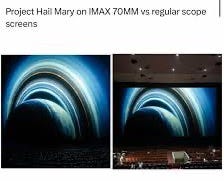
Man, look at that, you can see the top of the rings!
… which, I guess means that for the widescreen version, they just cut off the top and/or bottom of the screen. Kind of a reverse pan & scan.
Which is the “real” version?
Filmmakers like Christopher Nolan have been pushing the IMAX version of movies as the most “cinematic” version.
But almost every filmmaker who films for IMAX, including Nolan, has to make a “regular” widescreen version for the 99% of theaters that aren’t IMAX (which, in turn, is usually the one that makes it to home media).
Meaning, far as I can tell, punching in on the square image to make it widescreen. Which is exactly what film nerds were fighting against for decades before home media accepted “widescreen” as the default format.
Ew.
And, here’s a dirty little secret for you: most “IMAX” movies weren’t shot in anything close to IMAX, just reformatted to play in IMAX theaters.
The widescreen version IS the definitive version, and the IMAX version was made to… GASP… sell tickets at a higher price point.
Meaning, they punched in on the image, cutting off the sides to make a square.
Like… pan & scan.
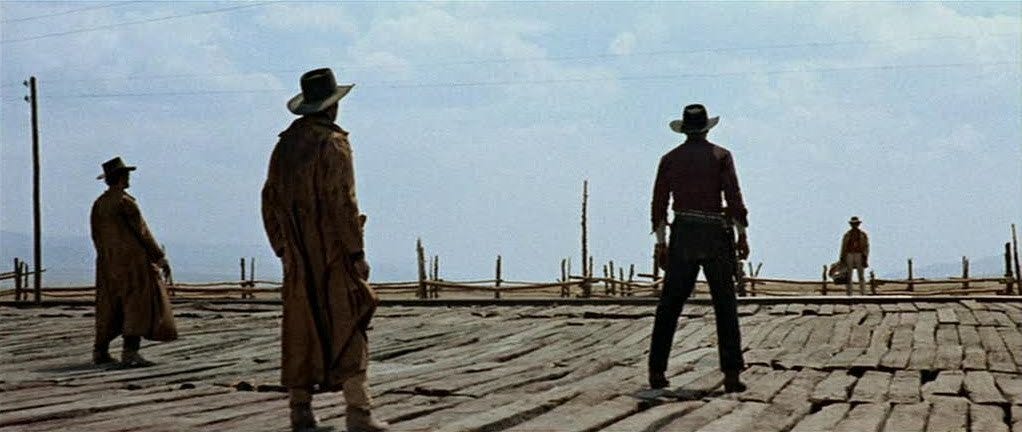
If Nolan’s IMAX The Odyssey is the definitive version, but most people are seeing it in regular theaters, doesn’t that mean most people aren’t seeing the “real” Odyssey?
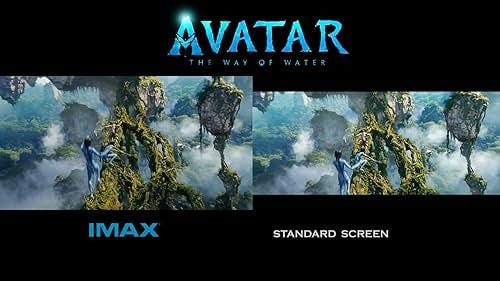
Look, man, I like the IMAX.
But nowadays, these movie frames being interchangeable isn’t showing that IMAX is better, just that it’s a different cropping.
And that feels like somebody isn’t making a choice somewhere.
Do we not need the extra imagery on the top and bottom? Or, if we’re going widescreen to IMAX, the imagery on the sides?
If not, then what’s the difference between that, and somebody adding extra widescreen to Charlie Chaplin movies with AI? I mean, all these different sides to movies are just window dressing, right?
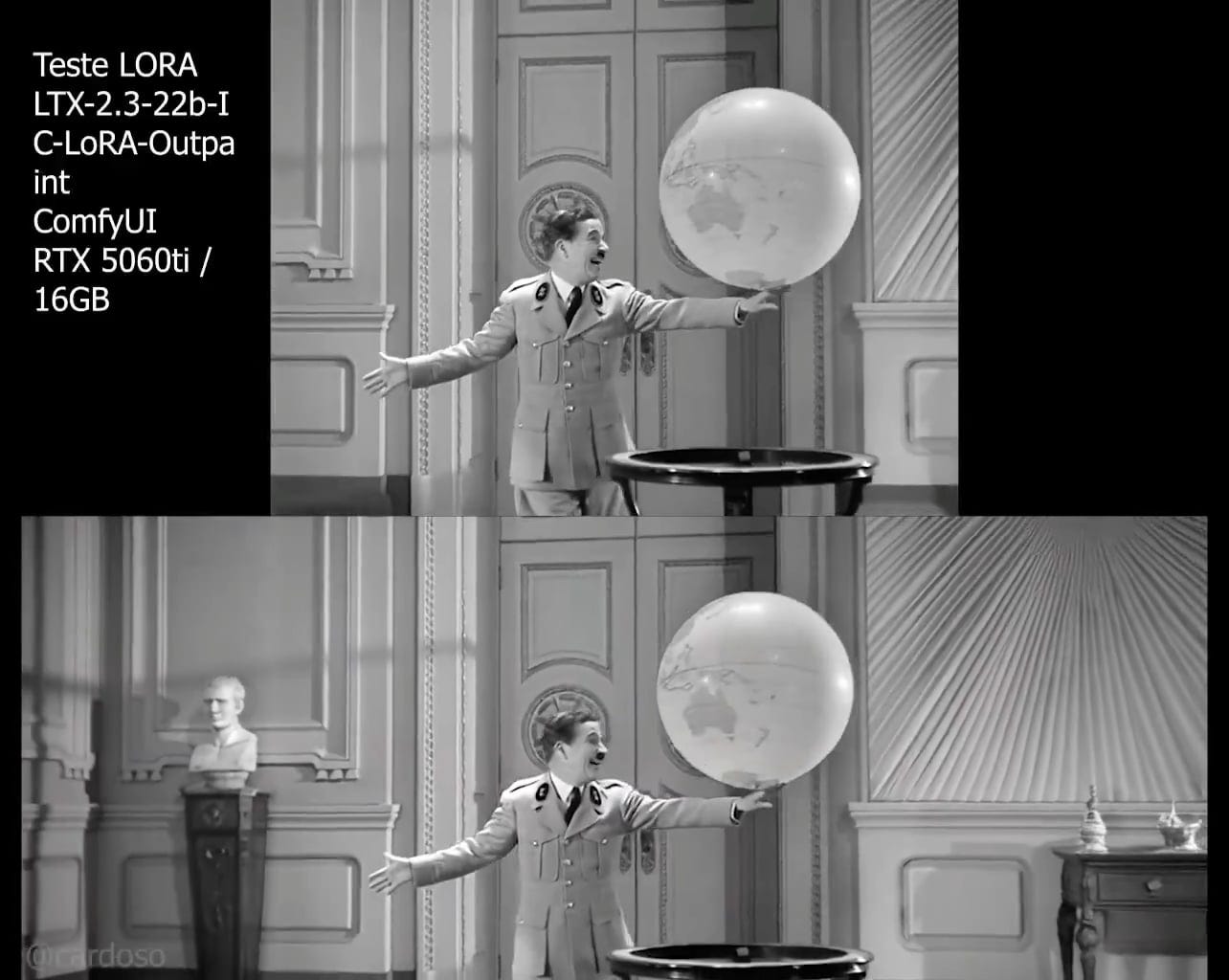
If you, the filmmaker, don’t care about how we see your movie, then I guess all my complaints are moot.
But filmmakers will make MUCH noise about how they choose to frame a film, the choices they’ve made specifically. I honestly don’t understand why there are multiple versions of the Avatar movies, given James Cameron’s perfectionism. It’s like he said, “Here’s my definitive, perfect vision.
“… but sure, go ahead, go see the shitty version with the weird cropping, IDGAF.”
Speaking of, in December, I went to a screening of Avatar: Ash and Fire at the Walt Disney studios lot, in a theater, I was led to believe, would provide the ultimate experience in seeing the film.
Though, now that I think on it, I don’t believe that theater was an IMAX theater, just a pretty good widescreen theater.
Not too long after, I saw James Cameron talking about the movie, and how the sound was designed so that if you sat in a certain place in the theater, you’d get the “perfect” experience, hearing it as it was meant to be heard.
I just happened to sit about where he describing, though a touch further back. So what about the other four hundred people who didn’t sit in the vague middle and front of the theater? Did they (or we, if I wasn’t in the right spot) not hear the movie correctly?
So I didn’t see nor hear the right version?
What was the point, then?
If you’re making a movie for three people in the correct seats to enjoy, what are the rest of us there for?
So what do I expect you, the reader, to do about it?
Well, not much to be done, really. Things are what they are.
BUT, I wouldn’t mind it terribly, if, for all these different releases, we maybe get a hint from the filmmaker why these choices were made, instead of the filmmakers going, “Yes, go see the movie, BUT IF YOU WANT THE GOODS, SEE IT IN IMAX, but don’t worry, all versions are awesome, BUT REALLY, THE DOLBY VERSION SOUNDS BEST, but really, any version is wonderful, and you’ll have a great time.
“… JUST BE SURE TO SIT IN THE DEAD MIDDLE, OR IT’S GONNA SUCK.”
STORIES…
Click the titles to get at muh stories:

© MMXXVI
Even though he added some footage, he also took some out, making the Special Edition shorter than the Theatrical release
