
“The Godfather” Violates Story Structure
I said what I said
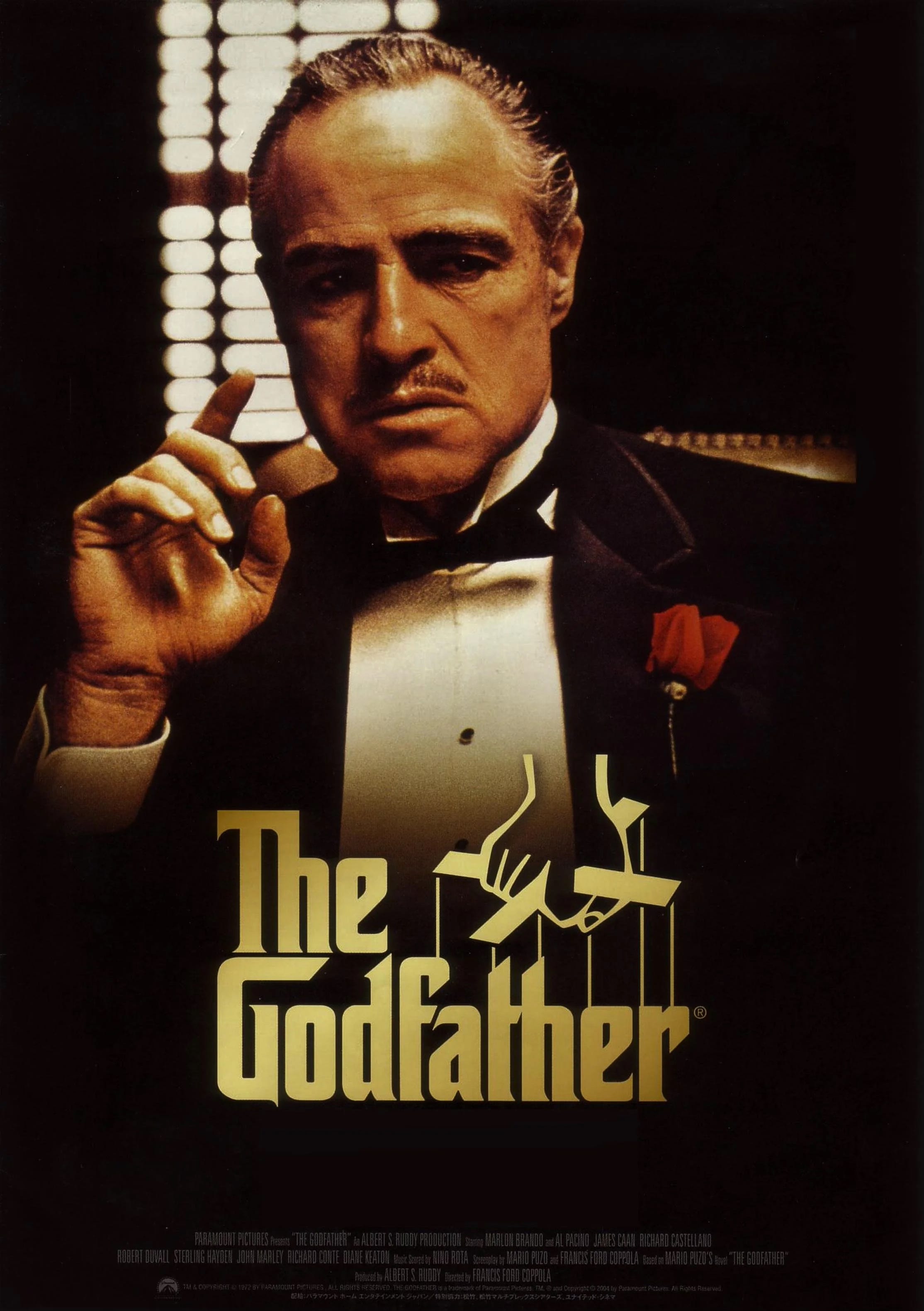
Before I get going, let it be known, I adore “The Godfather” and “The Godfather Part II.”
I know, bold for a man my age and demographic to say.
I just want to be clear before I say anything else, both of these movies are in my top ten, my desert island whatever, my ride or dies. These are the movies that the Boomers and Gen X can both agree on, beloved of mansplaining film nerds acrost the planet. Both seem to have slightly haunted Coppola’s life (y’know, in trade for untold riches and letting him make tons more movies), as he is forever living in their shadow, and try as he might, everything he does is compared to something he did when he was practically a kid.
I’m fascinated at the reputation these movies enjoy, since they aggressively ignore all the storytelling rules we take for granted.
“Godfather II,” the crazy structure is right up front, and has been made a big deal of since it came out - there’s countless essays, articles and manifestos about how it flashes back and forth in time, and tells two stories of father and son to compare and contrast each other, and what was once original has become common (it was the basis for every episode of “Lost,” another of my favorites). So I don’t need to go into that one.
Meanwhile, the original “Godfather” feels like a standard, old-fashioned straightforward narrative, and I would say it’s most definitely not.
(From here forward, I’m going to assume you at least have a passing knowledge of “The Godfather.” If you haven’t watched it, why on earth not?! Didn’t the amazing joke in “Barbie” get you the least bit curious?!)
When you start learning to write fiction, there are certain rules you’re given from the jump, and they’re more or less inviolate. Good writers violate them anyway, but the rules are old and written in languages mankind doesn’t even speak anymore.
• Protagonists should be active.
• Protagonists should have a strong, clear motivation that carries them through the entire story.
• Protagonists should fight to the bitter end to achieve their motivation.
Think about “The Godfather.” What’s the elevator pitch? I’ll use the one my mom told me when I was around eight or ten. “It’s about the son of a crime boss, and he doesn’t want to be a man like his father, but by the end, he has to take over the family business.” Overly simple, but I’m trying to really slice it down to basics. So, Michael Corleone’s motivation is to NOT be a man like his father. Got it. Pretty easy to follow. Perhaps not exactly “active,” but at least it gives him something to fight against.
Most movies would then put Michael through a series of trials that force him to choose between his family, and his desire to stay out of the Mafia. The screws would be twisted on him constantly - he tries to stay out, but circumstances keep piling up against him, until he finally has to make the choice, once and for all, to join his family.
That’s most certainly not “The Godfather.”
(That’s “The Godfather Part III.”)
Yes, the screws are put to him, as other crime families try to kill his father Vito. But this is in the very beginning. At that point, Michael’s still at his most oppositional. He’s young, just out of the army, having been a hero in World War II. He’s weary of fighting. And he’s spent the first thirty minutes of the movie explaining to his girlfriend (and thus, to we the audience) what kinda people his family are, and why he’s not like them.
This is already a very interesting point for me - audience members like my mom, who don’t necessarily give a good fuck about story structure, were very easily able to figure out Michael’s desire to be separate from his family, even though he only says it one time, and not even with a savage, “I’ll never be a man like you, father, never!” Just a simple, downplayed line to his girlfriend, “That’s my family, not me.” He’s not zealous. He’s not confrontational. He seems like a dude trying to avoid conflict, and his family seems happy to let him do so.
That’s the other part that sorta gets ignored when talking about this movie. Michael’s family knows he wants to remain a “civilian,” and they do their damnedest to honor that (Vito even later mourns that he wanted Michael to be free of the family’s crime constraints, so he could be a senator or governor or the like, and feels shame that he wasn’t able to keep Michael out of it). Right there is a storytelling no-no. Our hero shouldn’t be trying to do nothing! Boring!
This, almost certainly, is where other movies would hammer down on Michael. His father would want him to man up, to shut up about all this nonsense to not be in the biz, and how he’ll be excommunicated from the family if he doesn’t toe the line. Nope. Michael doesn’t want to be part of it, blood family and crime family are glad of it, no conflict there.
So when the assassination attempt is made on his father, there’s no reason to get Michael involved - except, when Michael goes to visit Vito in the hospital, and realizes Vito’s enemies are coming to finish the job, he makes the decision to save his father, and in his mind, crosses the line that he never wanted to cross, even signaling his change by telling his dad, “I’m with you, now.”
It’s understandable, he loves his father, and is willing to do what is necessary to save his life. And really, it’s not the line that Michael treats it as. He could do whatever was necessary to defend his father in that moment, and I’m pretty certain could still walk away a civilian - in fact, even after the attempt is foiled, the family keeps trying to keep Michael out of the fighting. But in his mind, he’s already made the leap. He’s with the family.
That’s a great storytelling bit - they tried to kill his father, twice, and he feels like he can’t stay out of it anymore. Awesome! He concocts a plan to take out an up-and-coming omertà twerp and a corrupt cop all in one go, the family can see it for the good plan it is, so now he’s in charge, right?
Well, no, after he kills the cop and the twerp, he’s off for a multi-year vacation to Italy, so nobody can kill him out of vengeance, while his idiot brother Sonny takes over the family. Michael even ditches his girlfriend that he was so concerned about proving he wasn’t like his family to, without so much as a goodbye. While the gang war rages on in America, Michael chills, gets married to a local girl, continues to be uninvolved in the direct workings of the Corleone family.
Until they kill his wife.
Oh, savage fortune! Vengeance will be had!
… well, eventually.
Meanwhile, back home, Michael’s idiot brother gets the violent death everyone’s been expecting. Vito, forced back on his feet to take charge again, negotiates peace, and the war is over. Michael returns to America, and putzes around for another year or so, as he quietly takes over the family biz. He kinda vaguely figures he should get a family of his own, so he hunts down his original girlfriend, and in the most unromantic proposal ever, says it’d be a good idea if they got married and had kids.
Doesn’t sound very dynamic, right? Our protagonist is being extremely passive. Shouldn’t be the stuff of which great movies are made, right?
But it’s riveting. And beautiful.
And Michael Corleone is a fascinating protagonist. As it turns out, he’s got a real knack for running the family biz. He’s more ruthless than his father, willing to patiently wait years for the right moment, like his brother never could. Though he claimed to not be like his family, he’s worse than them. His father is barely in the ground when, with one big sweep, he kills all his enemies and clears the board, something his father and brother were unable to accomplish. The Corleones reign supreme, all it cost him was his humanity.
Now, we can get into audience sympathy, and how after he’s been assaulted, his wife and family members killed, that nothing he does in response is unjustified. I agree. He tried to play nice, they fucked with him, so they got what was coming. A real John Wick proto-story.
But they ruined him. They took a guy who, debatably, was trying to forge a normal, American Dream-inspired life, and turned him into a cold-blooded mass murderer. The first statement of the whole series, “I believe in America,” is bullshit. America can’t and won’t save you, you have to save yourself and your family, no matter what it turns you into.
Michael doesn’t seem to care by then. He’s turned what little emotion he was capable of all the way off. Another big storytelling no-no. Our heroes aren’t supposed to be blocks of ice. I mean, the way Pacino plays it, Michael is almost incapable of showing emotion, even from the beginning. He’s happier in the beginning, he seems to love Kay, y’know, in his way; he even has the beginnings of a sense of humor.
But it’s not big emotion, it’s little stuff. Even Kay unsuccessfully prods him to tell her he loves her. Ain’t nobody supposed to be able to relate to somebody can’t tell his own girlfriend he loves her. He seems to become more genuinely happy in Sicily - the biggest grin Pacino gives in the film is dancing with his wife. But once she’s killed, he barely cracks a smile for the rest of the film.
Again, NONE of this should work, in theory. Shit is turned all the way down in this movie. The color palette is muted blacks and browns and yellows and grays. Vito and Michael’s voices rarely get above a whisper. When violence and noise does erupt, it’s loud and surprising, and brief. It happens, BAM, then everything turns all the way down again. Michael kills a mobster and a cop, with a train SCREECHING in the background, the music on the soundtrack blares in a brassy crescendo… then there’s a lovely little piano montage where gangsters sleep on mattresses and cook.
WHY DOES THIS WORK?
Just does. And it’s transcendent.
But again, in utter violation of traditional storytelling.
You want to see what a more traditional protagonist looks like in a “Godfather” movie, that’s the third one (“Part III” or “Coda: The Death of Michael Corleone,” depending on which version you watch). Pacino had shifted his acting style by then, becoming much more bombastic, which, in most other movies he’s in, I’m 100% down with. And I admit, I do love Pacino’s famous line, “Every time I think I’m out, they keep pulling me back in.” Michael is louder, more aggressive in his attempts to legitimize the Corleone family. He’s become (somewhat) warmer, has a more easy sense of humor.
But that’s not the Michael Corleone we’ve come to know. That’s a Michael who’s figured out what his problem is, and has the self-awareness, or at least the desire, to change. The Michael we know from the original two movies is incapable of change. Maybe Coppola figured even he couldn’t do a whole three-hour movie with the Michael Corleone of old. Maybe he’s right; he’s a smart man. But it feels like Al Pacino is the protagonist, not Michael Corleone.
(And hey, to be honest, I enjoy “Part III.” I’m glad the intervening years have seen the end of people blaming poor Sophia Coppola for the movie not being successful - no matter what you think of her acting, she was barely in the thing. If “The Godfather” and “Part II” didn’t exist, “Part III” would be considered a pretty good movie. It just suffers in comparison to the other two. It also has one big, transgressive idea - that the Catholic Church is in bed with the Mafia - and in the 90s, despite the shellacking this movie got, that was a pretty bold accusation.)
If you’re a film student, go ahead and bust this out at the next party you’re at, or if you’re feeling strong, give it to your writing teacher, see if they buy it (and make sure to give me a dollar if you do). You really wanna get up in somebody’s business, tell them that the true protagonist of “Die Hard” is Hans Gruber (per Steven de Souza, one of the film’s writers).
But we’ll deal with that another time.
My short story “Bastards of a Lesser God” is in Guilty Crime Story Magazine!

And don’t forget “Plastic Nest,” at Pulp Asylum!

Gots a new episode of “The Hold Up!”
And don’t forget “Sensory Overload!”
© 2025